CONTEXT
The bigger picture first
Sarees are one of the most considered purchases a woman makes — not a quick add-to-cart decision, but something she thinks about, compares, and imagines herself wearing before committing. On Myntra, a platform millions of women turn to for fashion inspiration and styling direction, sarees sit at the intersection of high intent and high hesitation. During peak festive season, saree discovery was strong. But converting that interest into purchases was a persistent challenge — held back by a mix of things: price, the difficulty of evaluating fabric through a screen, and a general gap between seeing a saree and feeling confident enough to buy it.
As part of the catalog team leading PDP experience for sarees, I wasn’t responsible for solving all of this. But I was responsible for what we showed users — and I believed there was something specific in how we were presenting sarees that was making an already hard decision even harder. This case study is about that initiative: what I found, what I built, and how I took it from a rough idea to 500+ live styles on the platform.
THE PROBLEM
High discovery. Low confidence.
The saree PDP had most of the basics covered — drape photography, fabric details, occasion tagging. But there was a quiet failure point that wasn’t obvious from the numbers alone. Users were landing, spending real time on the page, and still leaving without buying. That pattern — interest without conversion — pointed to indecision, not disinterest.
As catalog lead for the saree PDP, improving how we presented products to users was directly my responsibility. I wanted to understand not just what the numbers were showing, but what was actually getting in the way of users feeling confident — because that’s what would tell me where the catalog had room to do better.
THE RESEARCH
Finding the question behind the question
I put together a small cohort of women aged 25–35 — specifically those who had browsed sarees on Myntra recently but either hadn’t converted or had bought with hesitation. I sat with them while they browsed live, asked them to think aloud, and mostly just listened. No leading questions, no structured script — just observation with light prompting.
What came through wasn’t a complaint about the product — it was a feeling of being stuck:
“I open Myntra when I want to get ideas. But with sarees, I end up more confused than when I started. I can see the fabric but I can’t see the look.”
— Participant, Age 29
“I genuinely don’t know if this is a wedding saree or a puja saree or something I’d wear to a family lunch. There’s nothing that tells me.”
— Participant, Age 32
“In a store, the lady drapes it and you suddenly see it — the blouse, the fall, the whole thing. On the app you’re just guessing.”
— Participant, Age 34
Users weren’t missing information. They were missing the complete picture of what a saree could look like on them.
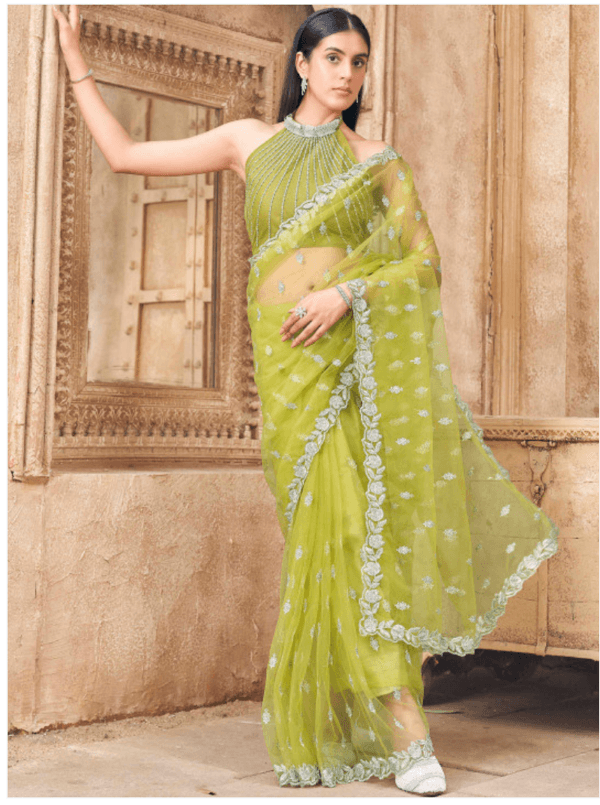
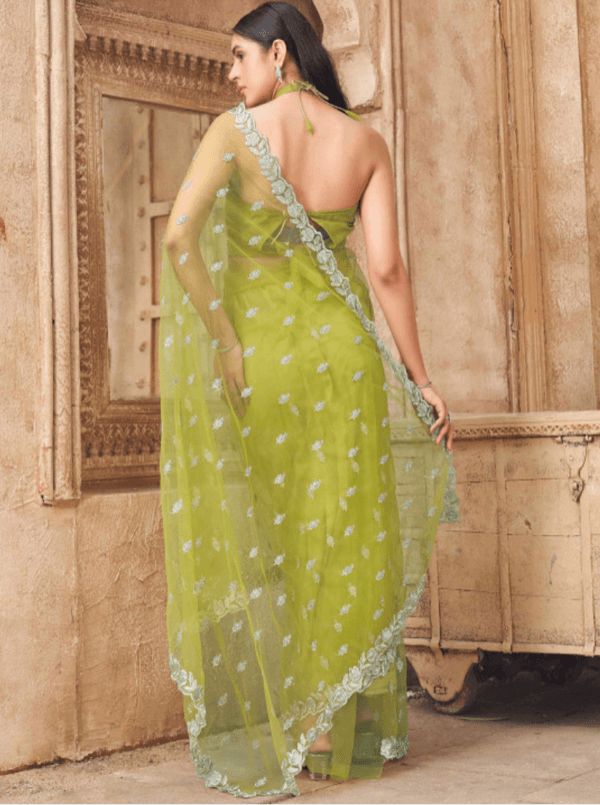
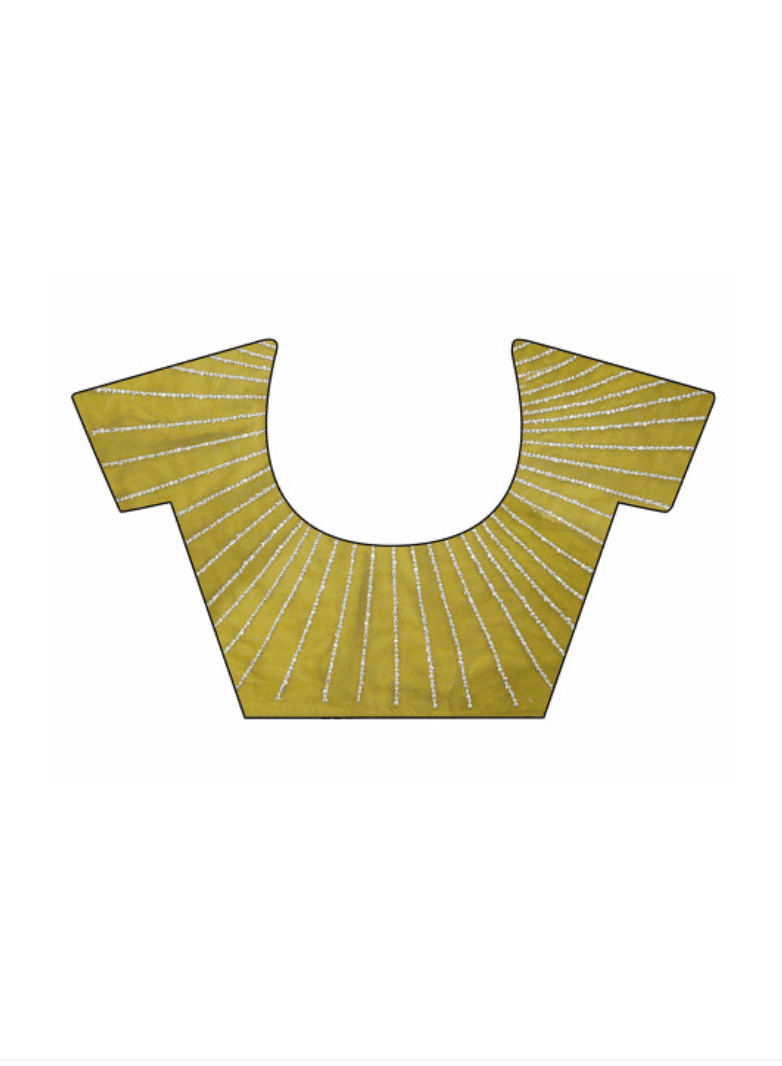
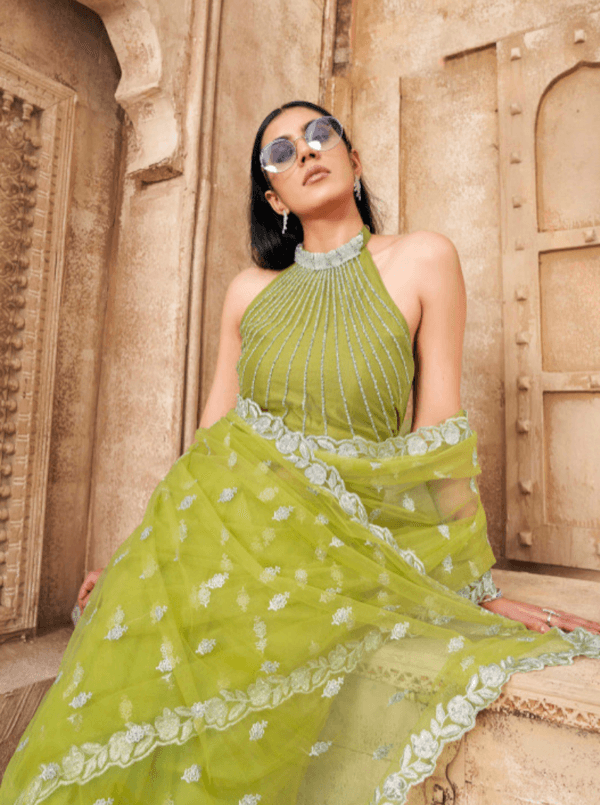
A saree isn’t a single garment — it’s an outfit that comes together through choices: the drape, the occasion, and critically, the blouse. The blouse is the element that changes the personality of a saree most dramatically — the same fabric can look traditional or contemporary, festive or understated, bold or minimal, depending entirely on the blouse. Yet on the PDP, it was being shown as a flat, unrecognisable swatch that communicated almost nothing.
The rest of the PDP had some of this context. The blouse was where it fell apart. It wasn’t the only reason users hesitated — but it was the most visible gap in what I owned, and the most actionable one. No competitor had addressed it. That made it both an opportunity and a clear place to start.
COMPETITIVE CONTEXT
No one had solved this
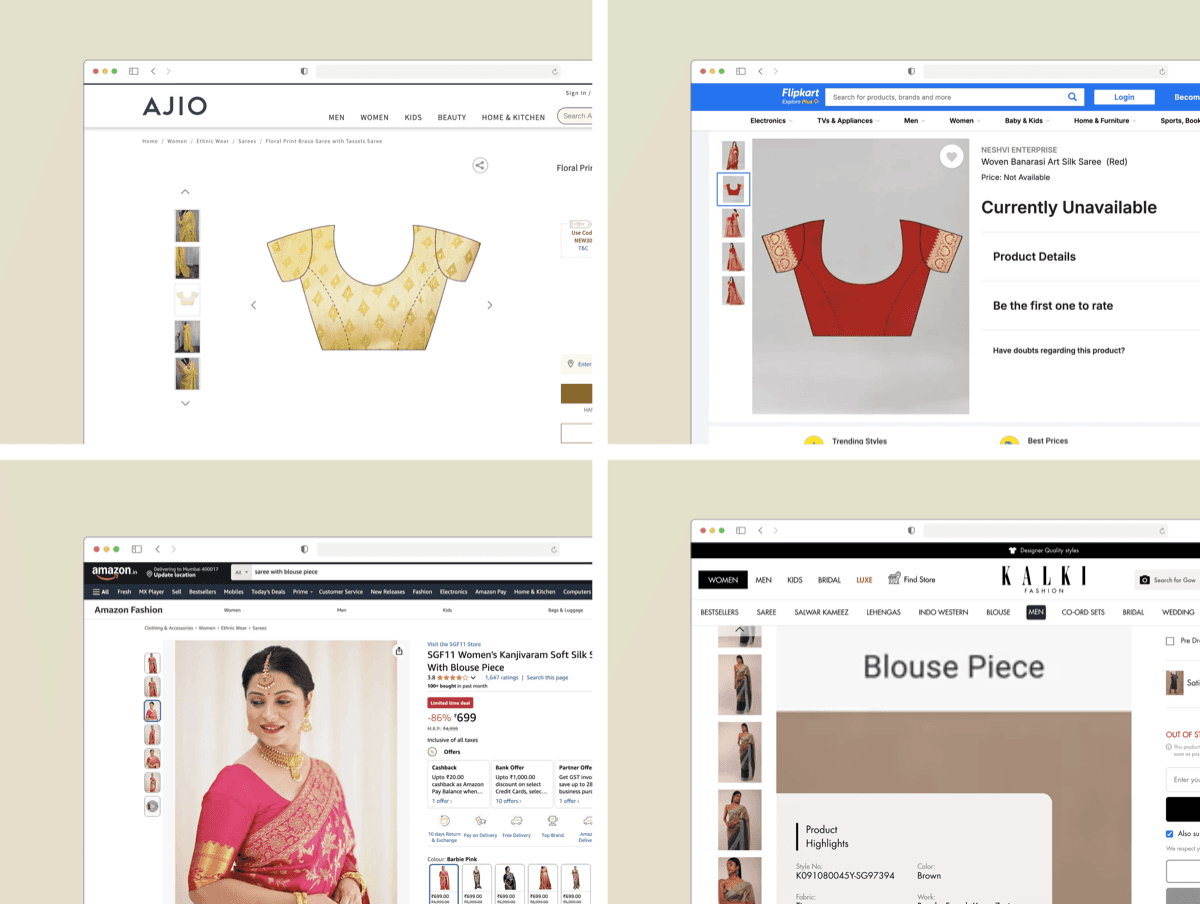
Before moving forward, I audited saree PDPs across Ajio, Nykaa Fashion, Tata Cliq, and Meesho. Every platform followed the same pattern — drape photography, minimal styling context, and a blouse swatch that told users nothing about design, neckline, or how the garment would actually look.
This meant there was no precedent to point to internally, and no competitor success story to derisk the investment. The case had to be built entirely on research quality and prototype conviction.
THE SOLUTION
Three phases. One direction.
Phase 00
Where we began — the flat 2D blouse silhouette
Before any intervention, the blouse on the saree PDP was represented as a flat 2D silhouette — essentially just the shape of a blouse filled with the fabric colour. No structure, no dimension, no indication of how the neckline sat or how the fabric would actually look as a garment.
This was the baseline. And for a category where the blouse plays such an outsized role in the final look, it was a significant gap in what the catalog was communicating.
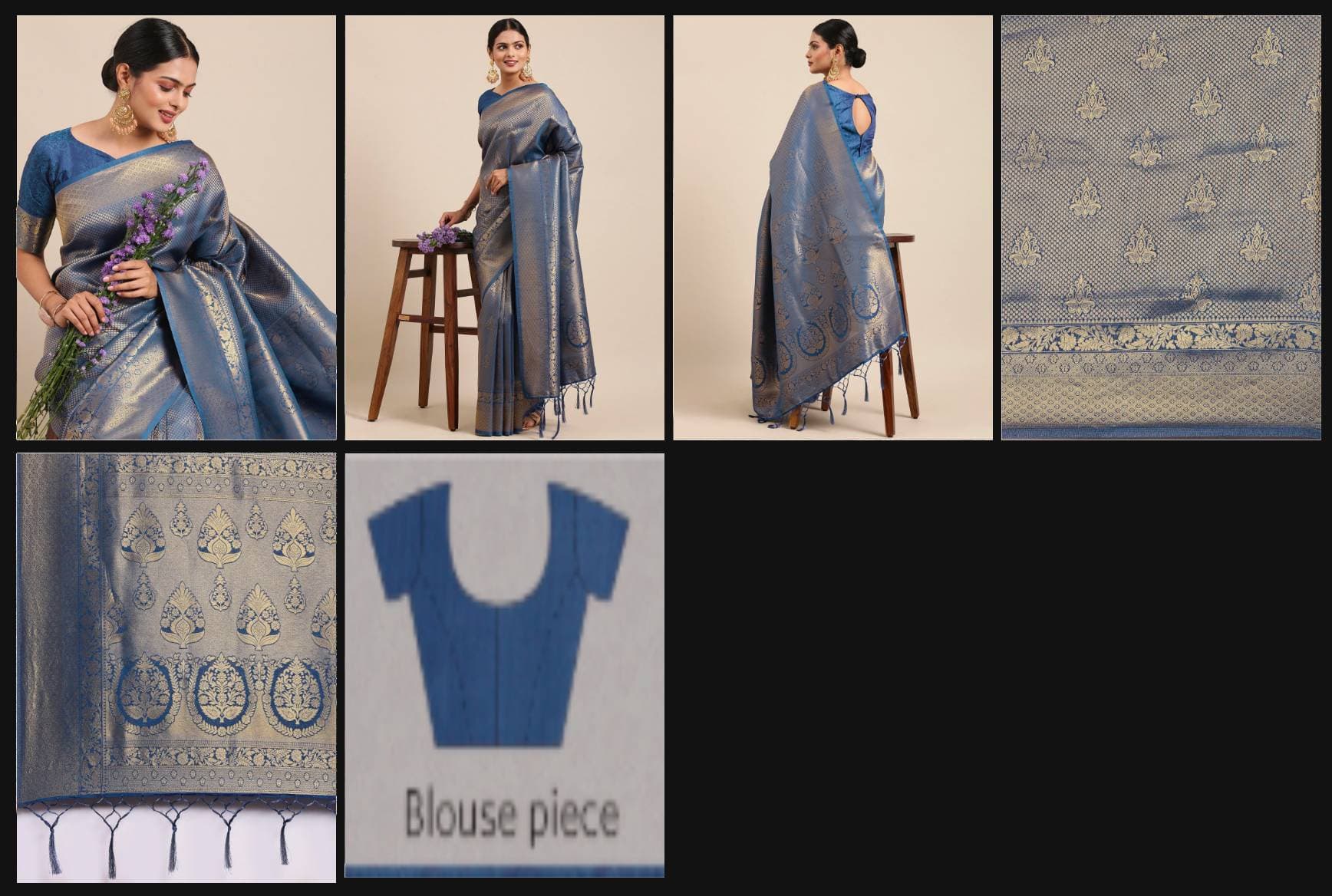
Phase 01: ~2 months
From flat to real — 3D blouse rendering and fabric swatch
The first intervention addressed the most immediate problem: the blouse looked like a shape, not a garment. We upgraded it to a 3D rendered representation — angled, structured, with the actual saree fabric mapped onto it.
Alongside this, we added a separate blouse piece photo to the PDP — a clear image of the actual fabric used for the blouse. For the first time, users could see both the silhouette of the blouse and the real fabric together.
The early response was encouraging — engagement with the blouse section went up and there was a modest but visible lift in conversion. Brand also started noticing the difference: the catalog was now representing the product more honestly.
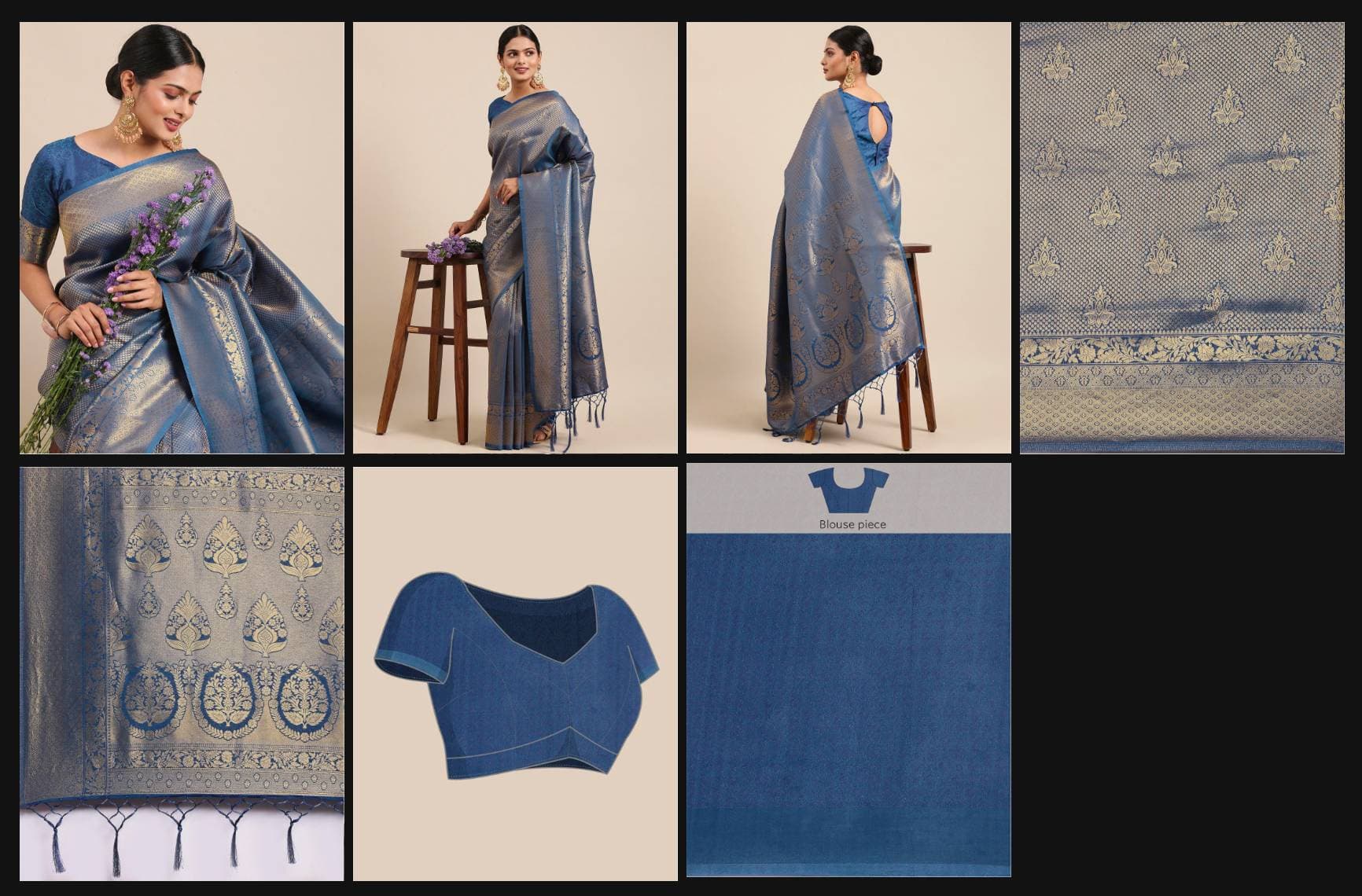
Phase 02: ~5 months
From one option to many — design variations with personas
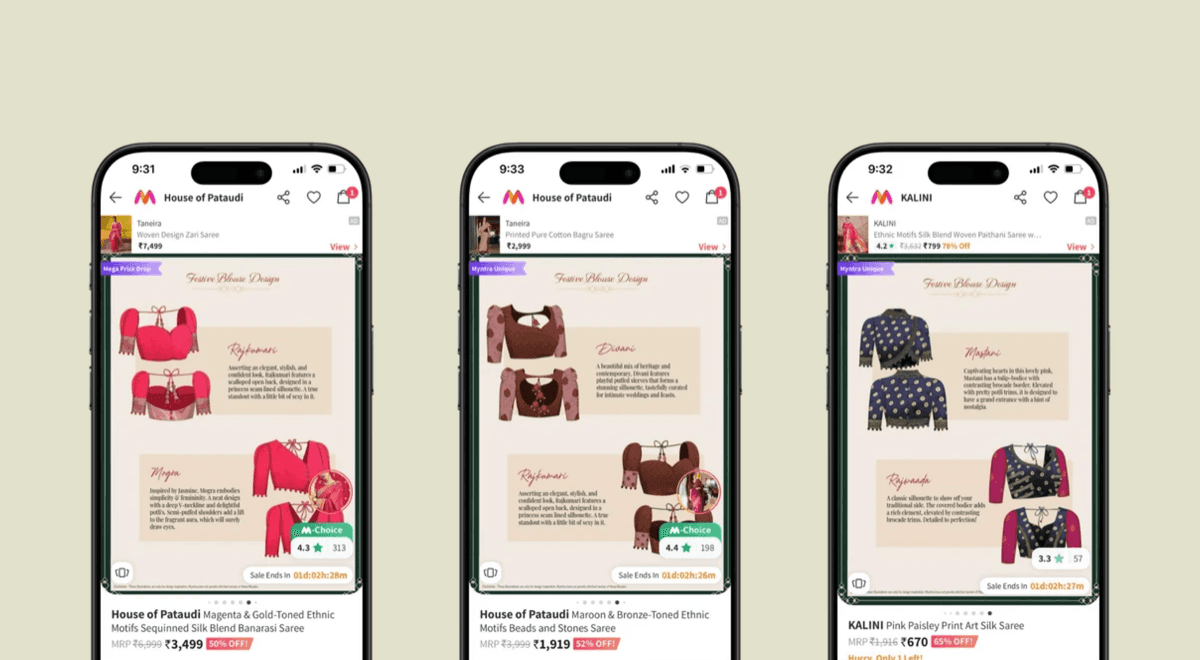
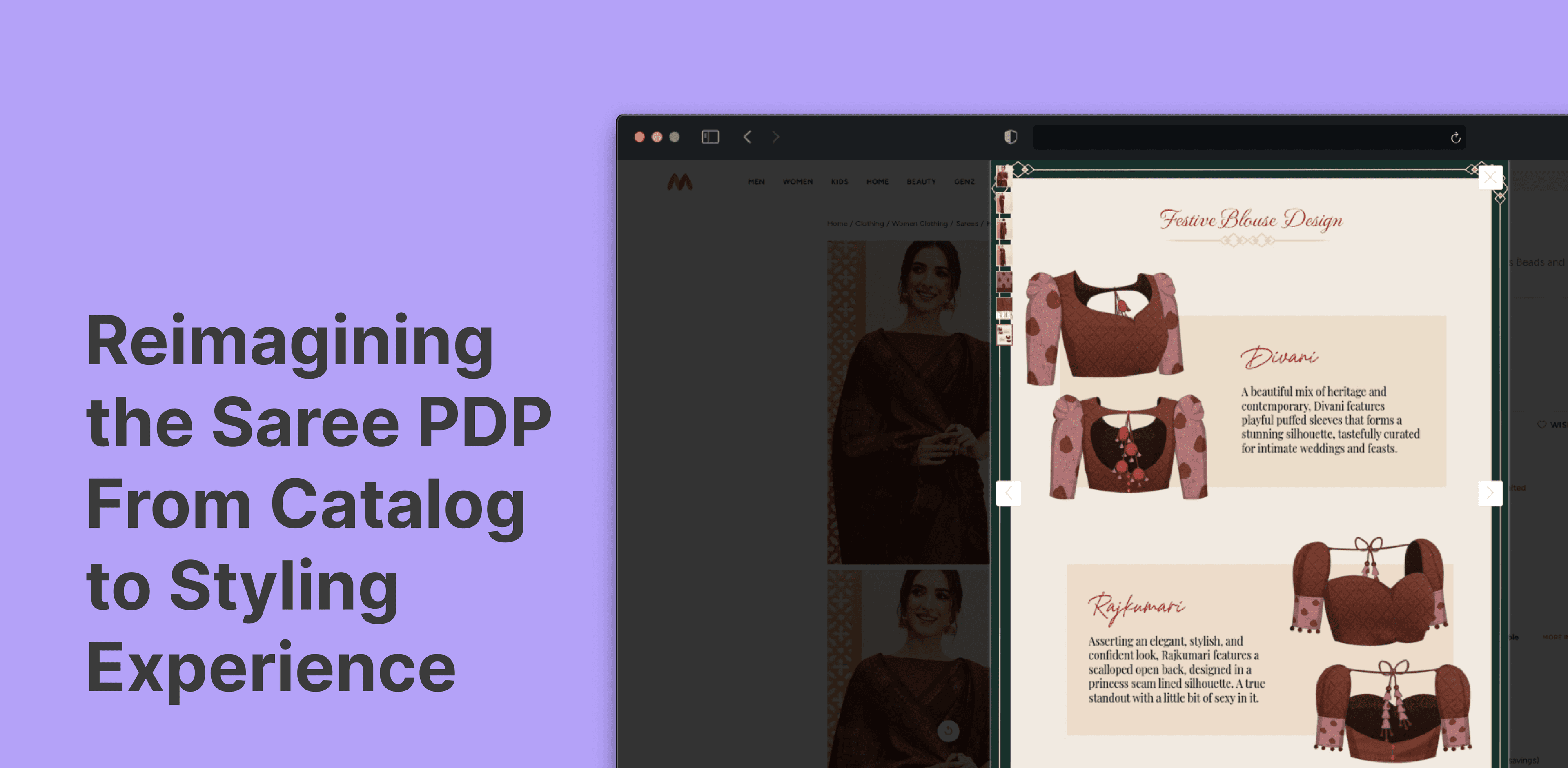
Phase 1 had solved visibility. Phase 2 tackled choice and confidence. Working with the design team, stylists, and content writers, we built a library of 150+ blouse design illustrations — each showing two distinct design variations with both front and back views.
But the bigger unlock was the persona layer. Each blouse design was given a name, a character, and a short styling note — turning a functional decision into an emotional one. Each persona answered the question users had been carrying silently: what can I actually do with this saree, and does it suit who I am?
This replaced the single 3D blouse render with a “Myntra Fashion Boutique” styled card — multiple design options, front and back views, personas and styling notes, all sitting alongside the fabric swatch.
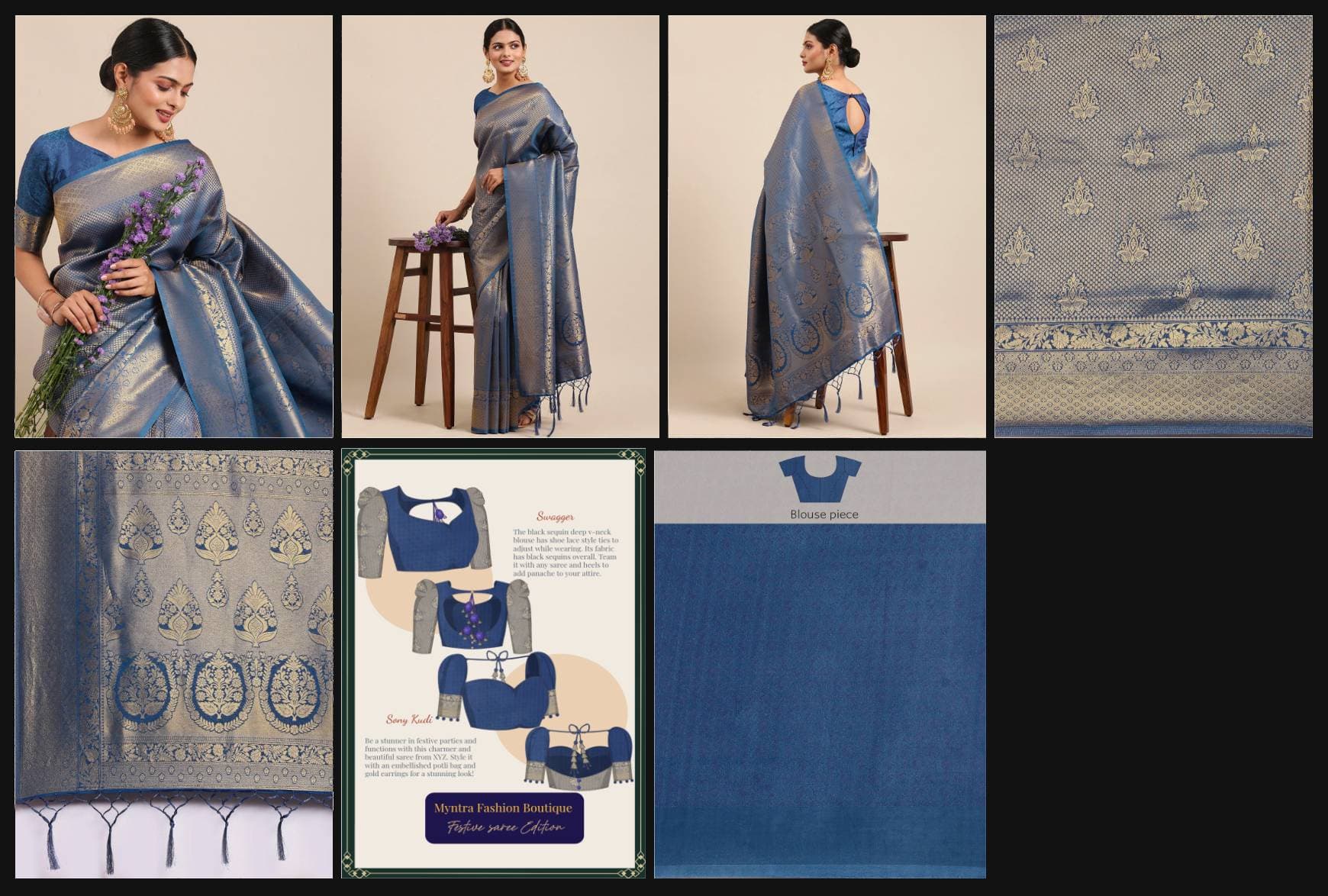
BRAND FEEDBACK
The work got noticed beyond the numbers
As the new catalog format rolled out, the brand team started sharing something that didn’t show up in the A/B data. They were seeing positive feedback on how well the PDP was now representing not just the blouse design, but the fabric itself — the texture, the pattern, the way it would actually look as a garment.
It confirmed that the work was doing more than helping users pick a blouse style. It was giving them a clearer, more honest picture of what they were actually buying — which is ultimately what good catalog work is for.
Phase 03: ~4 months
From prototype to platform — automation at scale
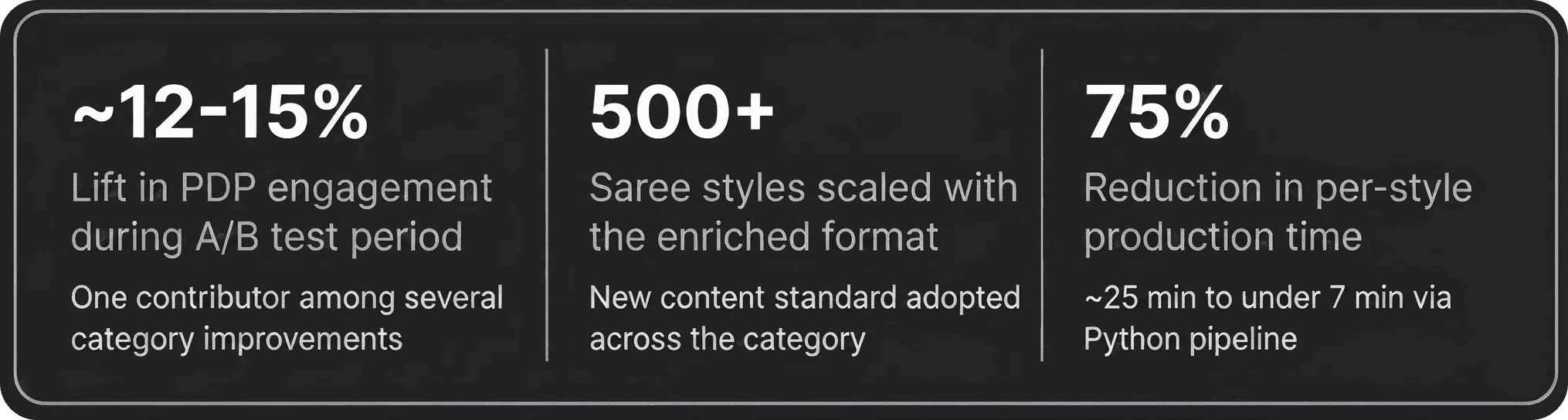
The enriched format worked — but creating it manually wasn’t sustainable. Each style required a designer to select the right blouse designs, map the fabric onto both variations, create front and back views, write the personas, and assemble the card. At roughly 25 minutes per style, this couldn’t scale to the full saree catalog.
I scoped an automation approach and partnered with engineering to build a Python pipeline that predicted the most appropriate blouse designs for each saree based on fabric, colour, and pattern — then automatically mapped the fabric onto the CAD illustrations and ran Photoshop actions to produce the final cards. Production time dropped from ~25 minutes to under 7 minutes per style — a 75% reduction.
THE RESULT
Meaningful movement, honestly measured
The enriched PDP format was A/B tested over 90 days across approximately 50,000 users. The blouse visualization and persona framework was one of several improvements to the saree experience during this period — it contributed to a broader positive shift in engagement and conversion, not as a single lever but as a meaningful part of the system.
The format was adopted as the new content standard for sarees on Myntra and identified for extension to adjacent high-consideration categories. Leadership approved full resourcing for the automation pipeline after the A/B results came in.